From fall into spring, the Santa Ana winds sweep down out of the inland canyons, dry and fast, and fan out across the South Bay. On a red-flag day, gusts in Carson regularly top fifty miles an hour. Those are the mornings our phone rings most, because the wind finds every weak tree in a yard and turns a small problem into a limb on the roof.
Why Carson trees fail in the wind
A healthy, well-pruned tree usually rides out a wind event without much trouble. The ones that come apart tend to share a few problems. A heavy, overgrown crown catches the wind like a sail instead of letting it pass through. Dead or cracked limbs were already on their way down and just needed a push. And where two stems meet in a tight V, the union is weak and tends to split.
The other half of it is underground. After a winter rain, Carson's clay-heavy soil holds water and softens, and a top-heavy tree can lose its grip at the roots and go over whole. The wind is only the trigger. The shape of the tree and the state of the soil are what decide whether it holds.
The trees we watch most in the South Bay
Some species give us more trouble than others when it blows. A few worth knowing on your own property:
- Eucalyptus grows fast and brittle and drops large limbs with little warning. A tall old one near the house is worth a close look.
- Ficus gets big and dense, and its shallow, spreading roots do not anchor a heavy crown well in soft ground.
- Queen and Mexican fan palms throw old fronds and seed pods in a gust, which turn into airborne trash over a driveway or a pool.
- Pines and other conifers hold a lot of sail and can tip when the soil underneath is wet.
None of these are bad trees. They just need to be kept in good shape when they stand near something you care about.
What to check before the season
You can spot most of the warning signs from the ground. Walk your trees before the wind starts and look for:
- Deadwood in the canopy, the bare branches that drop first in a gust.
- A lean that has gotten worse over the year, especially with soil cracking or heaving at the base.
- Cracks, or a tight V where two trunks meet, a natural weak point under load.
- A top-heavy crown that has not been thinned in years.
- Limbs hanging over the roof, the driveway, the fence, or the power lines.
If any of that describes a tree close to the house, have it looked at before a storm rather than after one.
How we get a tree wind-ready
The goal is simple: lighten the load and take out the weak points before the wind does it for you. On most Carson trees, that prep is tree trimming and pruning: thinning the crown so air moves through it, clearing the deadwood, and shortening the limbs that reach too far over the house. A weak union can sometimes be supported with a cable instead of losing the whole limb. And a tree that is already failing at the base is safer coming down on our schedule than on the storm's.
Palms are their own job. There it is mostly keeping the dead fronds and seed pods cleared so the wind has nothing loose to throw.
One thing not to do: top it
It is tempting to think that cutting a tree way back makes it safer in wind. It does the opposite. Topping forces a burst of dense, weakly attached regrowth that snaps off more easily than the wood it replaced, and the big open cuts let decay into the trunk. A few years on, a topped tree is usually a worse hazard than the one you started with. Reduction cuts made back to living branches are what actually bring the risk down.
After the wind passes
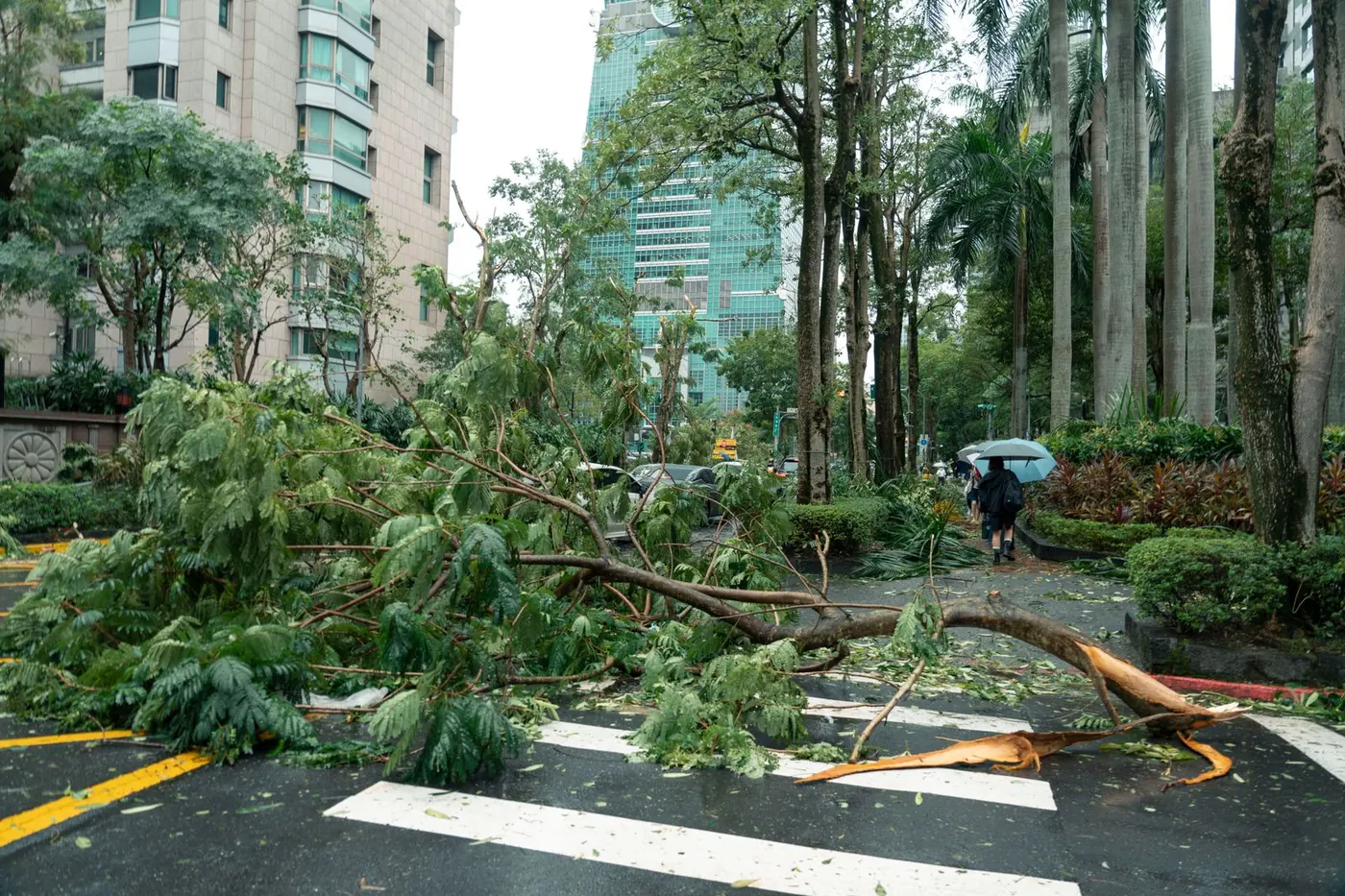
Once it calms down, walk the yard before you decide the tree is fine. Hanging or half-broken limbs, called hangers, can still come down on their own for days, so keep people and cars out from under them until they are cleared. A fresh lean, or soil lifted on one side of the trunk, means the roots moved and the tree may need to come out. And a limb that tore rather than broke clean should be cut back properly so the wound can close instead of rotting. If you are not sure whether a tree is still safe, that is exactly the thing worth a set of eyes on-site.
When to call, and who handles what
The best time to prep is before the season, not in the middle of a red-flag warning. If a limb is already down or resting on the house, that is an emergency call, and we get out as soon as it is safe to work. Two things are not ours to touch, though. If branches are tangled in the power lines, that is Southern California Edison's to clear, not a tree crew's. And the trees in the parkway strip and other public spots around Carson belong to the city, so a permit or a city crew comes into it there. On your own trees, we come out, look at what you have, and give you a price on-site before anything starts.