
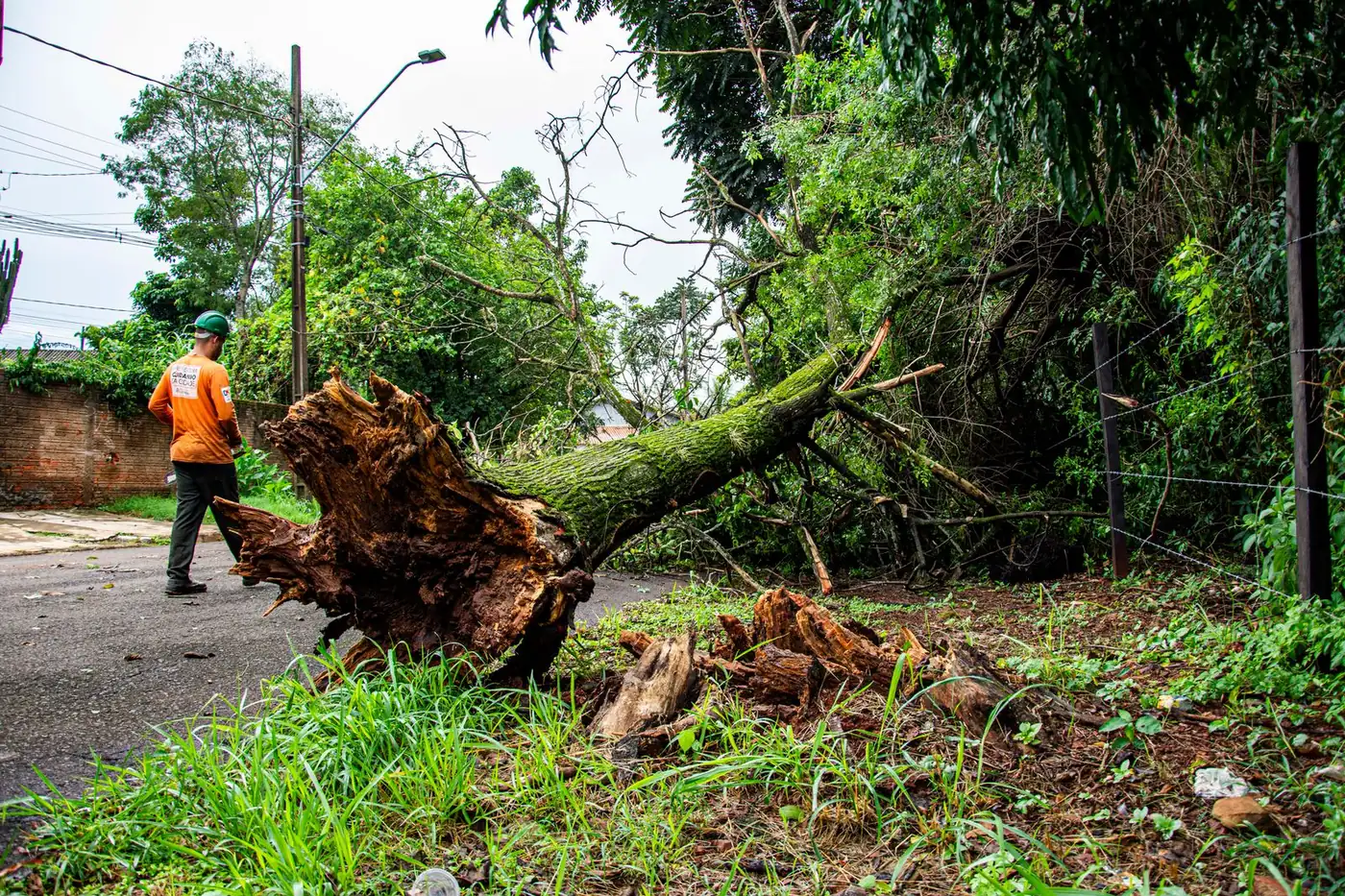
Once a tree is down, the stump is a separate decision, and it is one people usually do not think about until they are standing in the yard looking at it. There are two ways to deal with it: grind it, or dig it out. Here is the difference, and how to tell which one you actually need.
What stump grinding is
Grinding uses a machine with a spinning, toothed wheel to chew the stump and the surface roots down a few inches below grade. It is the right call for almost everyone, because it is fast and far less disruptive than digging out a root ball.
- Most stumps are done in about an hour, though a big one takes longer.
- The spot is left at ground level, ready to top with soil and replant or pave over.
- The grindings make a mulch you can rake back into the hole or have hauled off.
- The deep roots are left in the ground to rot, but with the stump gone they will not sprout.
What full stump removal is
Full removal digs out the entire stump and the main root ball. It leaves a large hole and a lot of disturbed soil, it takes longer, and it costs more than grinding.
- It makes sense when the ground itself is going to be built on or dug up, like before a pool, an addition, or a new foundation.
- It is the right call when the roots themselves are the problem and every last one has to come out.
- You will need to bring in soil to backfill and re-level the hole once it is done.
Which one do you actually need?
For a normal yard where you just want the stump gone and the spot usable again, grinding is the answer nearly every time. Save the full excavation for the cases where the soil is going to be dug up anyway, or where a contractor has told you the roots have to be out for what you are building. If you are not sure, tell us what you have planned for the spot and we will point you to the one that fits, not the one that costs more.
What about ficus and surface roots?
Carson has a lot of old ficus, and they are notorious for the thick surface roots that lift sidewalks, crack driveways, and get into sewer lines. Two things are worth knowing. Cut a ficus down and the stump keeps sending up suckers until it is ground out, so grinding is what finally stops the regrowth. And the roots damaging your hardscape run out well past the stump, so clearing the trouble usually means chasing and grinding those surface roots too, not just the stump itself. Where a root is already under a slab or a sewer line, that stretch may be a job for whoever is doing the repair.
How deep should a stump be ground?
It depends on what goes in the spot next. If you are replanting grass or a new tree, you want it ground deeper, roughly a foot to a foot and a half, so there is real soil to work with. If you are laying a patio, pavers, or concrete over it, it needs to be low enough to clear the base material underneath. Keep in mind the grindings settle over the first few weeks, so a spot that looks level on day one usually needs a little topping-off later.
What we check before we grind
A stump grinder does not know what is under it, so we look first. Buried irrigation and sprinkler lines, low-voltage wiring, and the edge of a fence or a slab all have to be found and worked around. If the stump is near the street or the parkway, there can be public utilities in play, and that is where an underground-service locate through DigAlert comes in before anyone grinds. It is a few minutes of checking that saves a cut pipe, or worse.
Same day, or come back later
We can grind a stump the same day we take the tree down, while the crew and the equipment are already there, or come back for one that has been sitting for months or years. Old, weathered stumps grind just fine. Either way, you get the price for the stump grinding or removal on-site before we start, and you decide whether the grindings stay as mulch or get hauled away.