
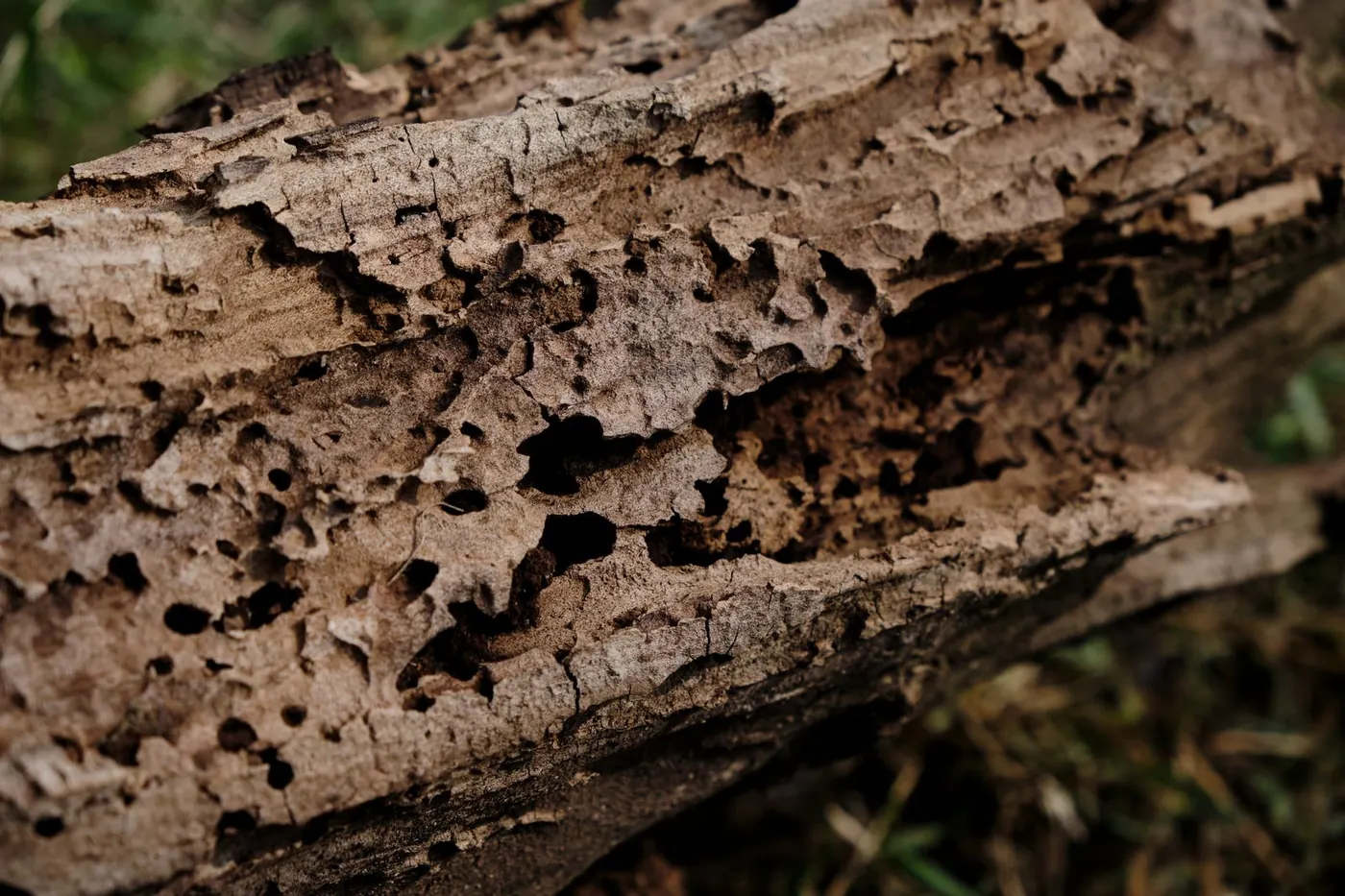
The polyphagous shot hole borer is one of the most destructive tree pests in Southern California, and it has been in Los Angeles County since the early 2000s. The hard part is that the early signs are easy to walk right past, and by the time a tree looks obviously sick, it is often too far gone to save.
What the shot hole borer is
It is a beetle smaller than a grain of rice that bores into the trunk and larger branches. It does not actually eat the wood. It carries a Fusarium fungus with it and farms it inside the tunnels, and that fungus is the real killer, because it blocks the tree's ability to move water and nutrients. The damage it causes has a name: Fusarium dieback.
A close relative, the Kuroshio shot hole borer, does the same thing and shows the same signs. For a homeowner the difference does not matter much. What matters is that both attack a huge range of trees, hundreds of species, so almost no yard in Carson is automatically safe.
The signs to look for
You have to get close to the bark to catch it early. Look for:
- Tiny entry holes about the size of the tip of a pen, often scattered in patches on the trunk and main limbs.
- Staining around the holes, dark and wet-looking, or a dry sugary crust the tree pushes out.
- Gumming or oozing from the bark, sometimes with a wet streak running down.
- Fine sawdust, called frass, caught in bark crevices or piled at the base.
- Dieback in the canopy above the infested area, with branches thinning or dying back.
- Dark, discolored wood if you scrape a little bark away around a hole.
One or two of these on their own can mean other things. Several together, in the same part of a tree, are a strong sign.
Which Carson trees are most at risk
The borer hits a long list, but some of its favorites are common around the South Bay: box elder, sycamore, coral trees, avocado, and several maples and oaks. The big shade trees in older Carson yards and along the streets are exactly the kind of host it looks for. If you have one of those and it is thinning out up top with no obvious other cause, it is worth ruling the borer in or out before you assume it is just thirsty.
Why it spreads so fast here
Part of what makes this pest so hard on the region is that it arrived with no natural checks, and Southern California's mix of host trees and mild weather suits it. The beetles themselves are weak fliers, so most of the long-distance spread is on us: green waste, firewood, and infested chips carried from one property to the next. That is the small piece of good news buried in the bad, because it means the one thing in your control, not moving infested wood, genuinely slows it down.
What to do if you see it
Two things matter most. First, get the tree assessed so you know how far it has actually gone, because the outside can look worse or better than the inside. Second, do not move the infested wood. Hauling logs and chips to another part of town, or stacking them as firewood, is exactly how the beetle reaches healthy trees. Infested material should be chipped small and kept on-site or disposed of properly, not passed around the neighborhood.
Can the tree be saved?
Sometimes, if it is caught early and the attack is still light. A tree with only a few entry points and a full canopy has a chance, and keeping it healthy and unstressed is part of holding that line. A heavily attacked tree, with galleries running through the wood and real dieback up top, is usually past saving, and it turns into a falling hazard as it dies and the wood goes brittle. There is no home-store spray that cures it, so be wary of anyone who promises one. We check for the borer on every tree-health visit and tell you straight which side of that line your tree is on.
Keeping your other trees off the menu
A stressed, thirsty tree is more attractive to the borer than a healthy one, so the best defense is boring: water your trees properly through the dry stretches, keep mowers and string trimmers from wounding the bark, and do not leave cut wood sitting in the yard. None of that is a guarantee. But a vigorous tree is a harder target, and catching one infestation early is how you keep from losing the rest of the yard with it.